

LASERS
If you have brown or Black skin, there’s a good chance you’ve been told lasers aren’t for you. Or you tried a treatment somewhere else and left with burns or dark marks that took months to fade. But almost all issues can be attributed to the device, the settings or the provider’s training, not to your skin.
Inclusive Aesthetics was built around treating melanin-rich skin. It’s literally what we do every day, not a special request.

Care Led by Grace Grymes Chapman, DNP
Grace Grymes Chapman, DNP, founded Inclusive Aesthetics and leads clinical care. She has 30 years in healthcare and 20 years as a nurse practitioner, with specialized training in laser and skincare protocols for skin of color.
She is a member of the American Society for Laser Medicine and Surgery, hosts provider trainings at the clinic and keeps up with laser training throughout the year. She has also been called in to help patients recover from laser treatments that went badly elsewhere, which shapes how carefully she plans every treatment.
Inclusive Aesthetics clinicians Lynn Borge-Jouini, RN, a Certified Aesthetic Nurse Specialist with more than 10 years in aesthetic medicine, and Blanca Vazquez, RN & Esthetician, who specializes in natural, balanced results using advanced techniques, also treat with lasers, injectables and advanced skincare.
Why Darker Skin Needs a Different Approach

Melanin protects your skin, and it also reacts. Heat, inflammation and even small injuries can trigger post-inflammatory hyperpigmentation (PIH), the dark marks that can stay around for months. With lasers there’s a second issue. Melanin in the skin absorbs light too, so a wavelength or setting chosen for lighter skin can heat the surface instead of the target.
None of that means avoiding treatment. It means the right wavelength, conservative starting settings, enough healing time between sessions and pigment-safe prep and aftercare. We plan that way for every client.
LASER TREATMENTS
We work with two laser platforms, the Lumenis M22 and AuraLux by Acclaro. Having more than one system means we match the treatment to your skin instead of fitting your skin to a machine.
Laser Hair Removal
On deeper skin, the skin and the hair compete for laser energy. We treat hair removal on the Lumenis M22 and choose wavelengths that pass through the melanin in the skin to reach the follicle. Some skin tones get a small patch test first.
Dark, coarse hair gives the laser a clear target once the wavelength is right. Laser hair removal is also used to reduce razor bumps and ingrown hairs, since fewer hairs means fewer hairs that can curl back into the skin.
Most clients need 6 to 8 sessions spaced 4 to 6 weeks apart. On deeper skin we often take a slower, staged approach.

Dark Spots, Melasma and Uneven Tone
Sun damage, post-acne marks and uneven tone respond well to laser when the protocol is right. Melasma takes more care on any skin tone and on deeper complexions it calls for an especially conservative approach. Expect gradual improvement over a series of sessions, often paired with peels and medical-grade skincare.
Texture, Fine Lines and Scarring
AuraLux has three treatment levels, so the same platform can be dialed up or down. 3DMIRACL®, the lightest level, works on tone and texture with very little recovery. Refresh targets mild to moderate sun damage, age spots, uneven complexion and fine lines. Renew, the deepest level, is used for wrinkles and scars and requires more aftercare.
Redness and Visible Vessels
Redness and visible capillaries are one of the more straightforward concerns to treat across skin tones. It can be a good place to start if you’re nervous about laser.
Tattoo and Old Brow Pigment Removal
Laser breaks up ink so your body can clear it over the following weeks. That includes full tattoos, lightening for a cover-up and faded microblading or old brow tattoos. Sessions are spaced 4 to 6 weeks apart, and most tattoos need 8 to 12 sessions. On deeper skin we adjust wavelength, energy and timing to remove ink while protecting your skin.
Skin Treatments Without Laser
If laser isn’t the right fit yet, or you want to build results alongside it, these treatments are planned with the same pigment-safe approach.
Microneedling
We use the SkinPen, an FDA-cleared device. Microneedling doesn’t use heat or light, so it carries a lower risk of PIH than many other treatments. That makes it one of the most effective options for acne scarring on darker skin, along with texture, pores and fine lines. Most clients see their best results after 3 to 6 sessions spaced 4 to 6 weeks apart.
Chemical Peels
We choose pigment-safe acids, peel strength and contact time based on your tone and history. Options include acne, anti-aging, dermaplaning plus peel and Hydrojelly mask peels. Expect light flaking for a few days.
DiamondGlow Facial
DiamondGlow exfoliates, clears pores and infuses targeted serums for brightness and hydration. It’s an easy pick before an event.

FILLERS & NEUROTOXINS
Wrinkle relaxers (Botox, Daxxify and Jeuveau) and RHA fillers, dosed conservatively so you still look like you. On darker skin we use careful technique to avoid unnecessary trauma, and we’ll show you how to protect your skin while everything settles.
HAIR RESTORATION
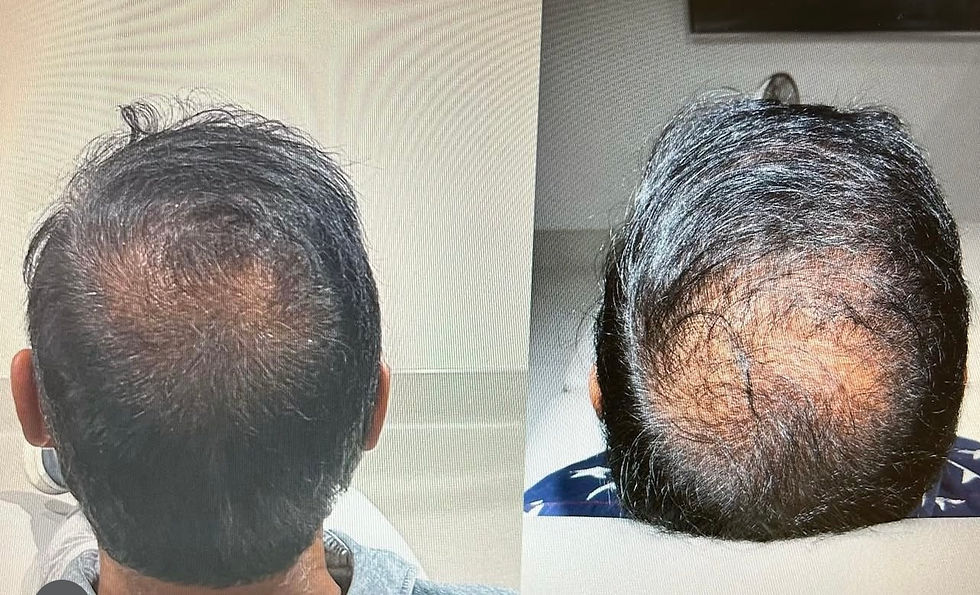
Hair thinning rarely has one cause. Hormones, stress, genetics and inflammation around the follicle can all play a part. PRP and growth factor treatments support scalp health and density over a series of 3 to 4 monthly sessions, followed by maintenance.

What Your Consultation Covers
Consultations at Inclusive Aesthetics are more thorough than most people expect. We go over:
-
Your skin tone, assessed with the Fitzpatrick scale
-
Sun exposure, tanning habits, ancestry and family background
-
Medications, skin conditions and any history of keloids or skin cancer
-
Past reactions to lasers, peels, waxing or injectables
-
Your current skincare routine
-
A patch test, when appropriate
If we have questions about anything we see or hear, we’ll ask for a sign-off from your primary care provider or dermatologist before moving forward. You leave with a plan, a realistic timeline and an honest answer about what we’d skip.
Frequently asked questions

Start With a Consultation
Every plan starts with a conversation about your skin, your history and your goals. Book online or call 206.495.2256 during clinic hours.
Serving Normandy Park, Burien, Des Moines, Kent, SeaTac and South King County.